
Art for Burnout
Collage, anyone?

Once a month The New York Times asks readers to spend 10 minutes with a piece of art. This month’s piece was Cityscape by Romare Bearden. It hangs in Bellevue Hospital, which, I was surprised to learn, has 8,000 items in its art collection. The Times’s has it set up so that one can toggle round, moving up and down, left and right, in and out. There is much to see in Cityscape, as there are so many windows and rooftops and birds and street action.
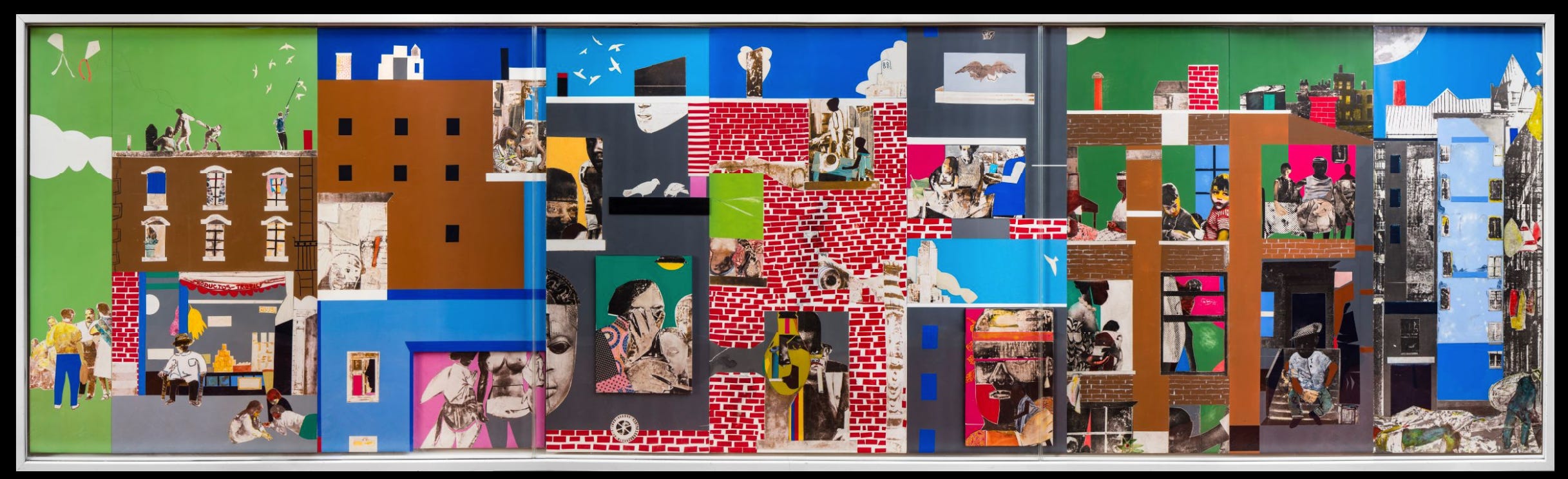
After I finished my time with the art, I moved on to the accompanying essay by Larry Buchanan. It began in the established mode, walking us through the rich detail in the work and relating facets of the artist’s life. But then.
First, there was a wonderful video of Romare Bearden, who was explaining to his friend how he saw the varying sizes of the buildings create a kind of music. I was shocked because I’d had this exact lecture before, only it was architect Dan Rothschild explaining how he designed The Legacy, a set of buildings for seniors in Pittsburgh’s Hill District. He considered how “jazz” might show up in the form of a building, and settled on the idea of “syncopated spaces.” Not only do I talk about Dan’s work in my book, Urban Alchemy: Restoring Joy in the Sorted-Out Cities, but also Dan’s exploratory drawings became part of the book’s cover. You can see a snippet of The Legacy in the photo inset.

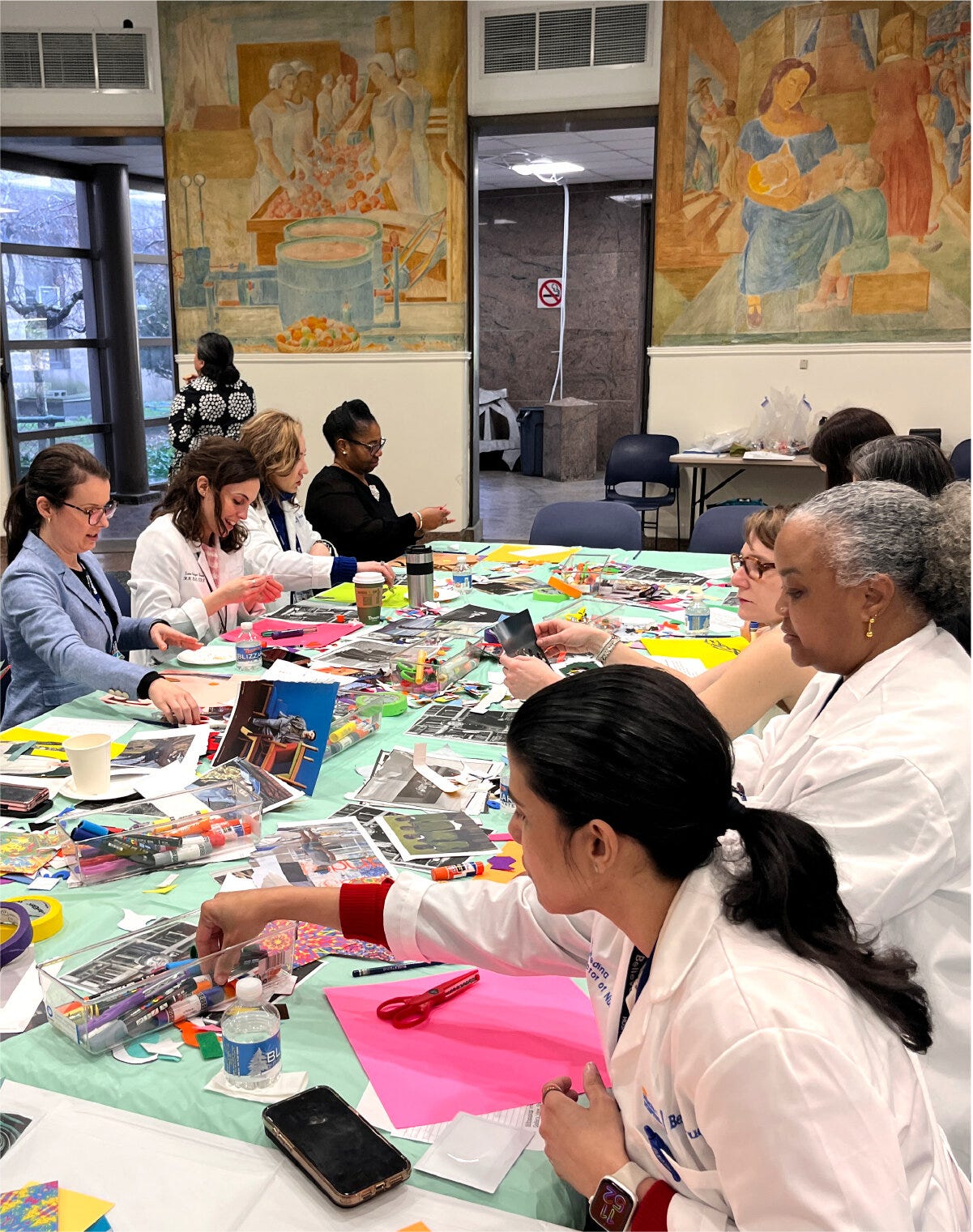
Second, the essay segued from art for history to art for burnout by connecting with a group nurses who had gathered with an art therapist to talk about Cityscape. After reflecting on the mural, the group adjourned to a table dense with collage makings. We see them creating, under historic pieces of art depicting women at work. aistudio.google.com said of the left piece: “This artwork is a painting titled “Canning”, created in 1937 by the American artist Lucile Blanch (1895–1981).” Of the art on the right side, aistudio.google.com said, “This artwork is titled “Nursery”, created in 1937 by the American artist Lucile Blanch (1895–1981). It is a companion piece to ‘Canning.’”
Was this photo with its homage to women at work and homey collaging meant to convince us that Bearden is not just for fancy museums but for my house and yours? Is it possible that spending two minutes — which the therapist said was enough to shift feelings — could help us manage our distress and exhaustion?
It made me feel a new delight in my daily “calendaring” practice, which uses collage to incentivize doing chores — not too much of a stretch to burnout prevention and management. I say, “Let’s try it! We might like it!”